Welcome to the inaugural issue of the MAGNET'S Monday Design Digest.
The digital product landscape is shifting faster than ever. Every Monday, we break down the most critical trends, conversations, and paradigm shifts in the design industry so your team can start the week informed, adaptable, and inspired.
Here is what is driving the conversation this week.
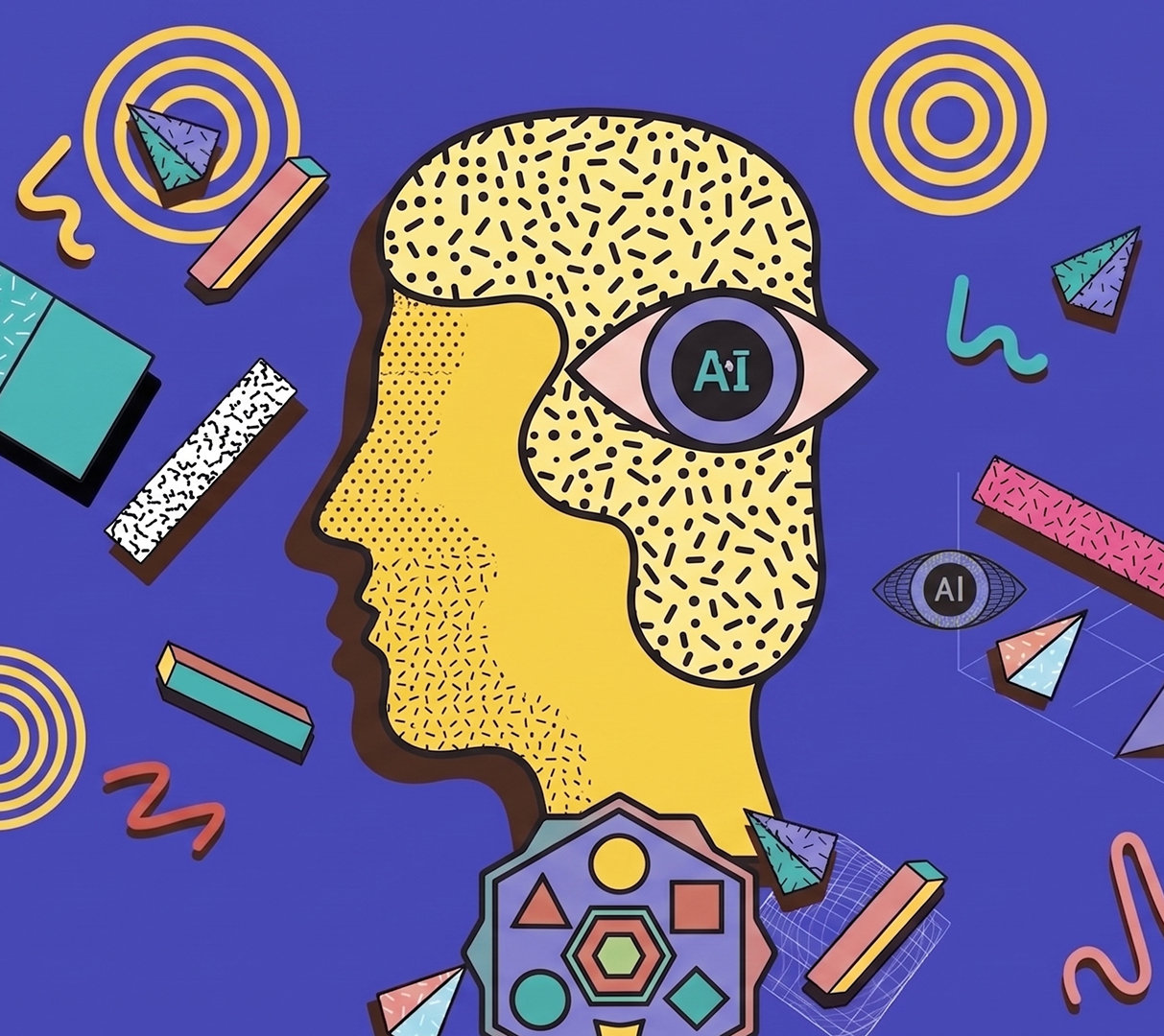
The AI Shift: From Pixels to Strategy
AI is rapidly commoditizing the manual production of UI screens. While tools are saving UX practitioners time on nearly every execution-based task, the industry sentiment remains mixed due to unreliable outputs and inflated business expectations.
What does this mean for the future of the product designer? The role is evolving from pixel-pushing to strategic architecture. Moving forward, a design team’s true value will not be measured by how fast they can generate wireframes, but by their ability to provide strategic judgment, complex problem-framing, and stakeholder alignment—the nuanced, human-centric tasks that AI cannot replicate.
The Aesthetics of Authenticity: "Digital Grunge"
As AI-generated perfection floods the market, consumer trust has plummeted. Users are increasingly skeptical of frictionless, sterile interfaces, giving rise to "digital provenance" as a core UX discipline.
To visibly demonstrate human craftsmanship, forward-thinking designers are pivoting to a "digital grunge" aesthetic. This intentional imperfection acts as a premium signifier of authenticity:
- Raw Textures & Asymmetry: Moving away from smooth gradients and rigid grids in favor of organic, deliberately misaligned layouts and noisy textures.
- Hand-Drawn Elements: Integrating sketchy illustrations, handwritten typography, and rough borders to signal that a real person authored the interface.
Expanding the Interface: Spatial UX and Agents
The very definition of a "user" is expanding. As AI agents increasingly act on behalf of humans to complete tasks, industry leaders are suggesting a shift away from traditional "User" Design to focus purely on "Experience Design"—a broader field encompassing both human goals and the autonomous agents executing them.
Simultaneously, UI is escaping the two-dimensional screen. Driven by ecosystem leaders like Apple and Meta, Spatial UX is becoming a mandatory design skill. Interfaces are now context-aware, requiring deep systems-level thinking and gesture-based navigation to function seamlessly within a user's physical environment.
Neuro-Inclusive and Ethical UX
Dark patterns are no longer just bad practice; they are a legal liability. Ethical UX has transitioned from a nice-to-have to a strict business requirement, emphasizing long-term value and user trust over manipulative, short-term conversion tactics.
On a global scale, regulations like the European Accessibility Act are forcing neuro-inclusive design to the forefront of product roadmaps. Designers are standardizing critical features to support the 15–20% of the population who are neurodivergent:
- Focus Modes: Allowing users to easily toggle off auto-playing videos, heavy transitions, and distracting animations.
- Cognitive Load Reduction: Relying on predictable navigation patterns, simple sentence structures, and highly customizable typography settings.
Creating digital products today requires more than just making things look good. It requires designing for trust, physical context, and a vastly broader definition of usability. We will see you next Monday for Issue #2.