If you were a designer in the late '90s or early 2000s, you remember the grind. Digital design meant slicing up images in Photoshop, battling with fixed pixel-width layouts, and treating every single web page like a bespoke, static magazine cover. You were, by definition, a "pixel-pusher."
Today, the entire paradigm has shifted.
We are no longer designing static assets trapped on flat screens. Modern digital design has evolved into engineering living, breathing ecosystems. If the 2000s were about figuring out how to make the digital world look good, the 2020s are about figuring out how to make it adapt.
Here is a look at the major shifts transforming the role of the visual and digital designer today.
1. The Death of the "Page" (Atomic Design Systems)
In the early days of the internet, designers built websites one page at a time. Today, that approach is entirely obsolete. Instead of designing pages, modern teams build Design Systems using a methodology called Atomic Design.
- Atoms: The smallest foundational elements (a specific font, a hex color, a button shadow).
- Molecules: Combinations of atoms (a search bar with a button and a text field).
- Organisms: Complex UI sections built from molecules (a dynamic navigation header).
By designing modular systems rather than fixed pages, global brands can update massive, interconnected applications instantly just by tweaking a single "atom." It is design built for infinite scale.
2. Escaping the Rectangle (Spatial Computing)
For decades, digital design was bounded by a 2D rectangle—whether it was a bulky CRT monitor or a sleek smartphone. With the rise of spatial computing and mixed reality, designers are finally breaking out of the frame.
Visual designers now have to consider the Z-axis. They must factor in depth, natural lighting, and how a digital interface casts a shadow on a user's actual living room floor. Gestures and eye-tracking are replacing the mouse click and the screen tap. We are literally writing the visual rulebook for how humans will interact with spatial data for the next decade.
3. Co-Creating with AI
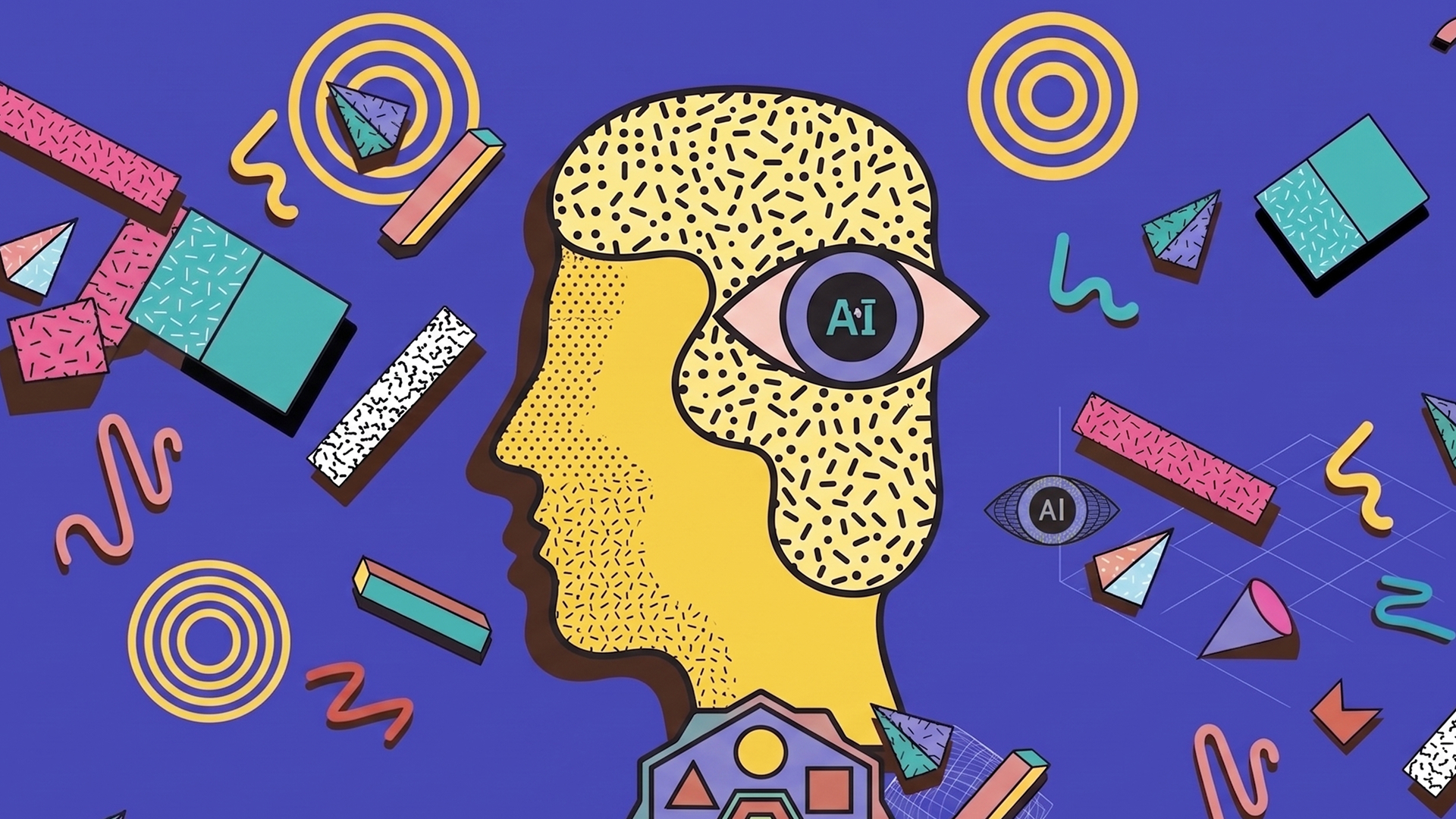
Generative AI isn't replacing designers; it is upgrading them into Art Directors. We are transitioning from drawing every asset by hand to directing algorithms to do the heavy lifting.
Instead of spending days mocking up variations of a layout, a designer can now set strict logic models, input brand parameters, and prompt AI to generate thousands of variations in seconds. The role of the designer has shifted from creating the image to curating the rules that govern the image.
4. Hyper-Personalized, Fluid Interfaces
In the 2000s, every single user who visited a website saw the exact same layout. Today, interfaces are fluid and deeply personalized.
Modern UI instantly shifts between light and dark modes, responds to dynamic text scaling, and reflows across an infinite variety of screen sizes. Moving forward, AI will adapt the UI structure specifically to the user in real-time—increasing contrast for someone with poor vision or moving primary navigation elements based on whether a user is right or left-handed.
Final Thoughts
The era of designing "things" is over. We are now in the era of designing experiences and systems.
The modern digital designer is part architect, part psychologist, and part technologist. We no longer just care about what a button looks like; we care about how the system adapts when a million people press that button across a thousand different devices.
By embracing atomic systems, spatial computing, and AI-driven workflows, designers are no longer just decorators of the digital space. We are the engineers building the immersive, adaptable future of the internet.